Red Flags When Screening Ro water purification systems Suppliers: A Due Diligence Guide
Most supplier problems are visible before the first order â in how a quotation is written, how questions are answered, and which documents arrive unasked. Screening for red flags costs hours; discovering them after payment costs orders. This guide lists the RO water purification systems warning signs and what each one really means.
Due diligence sounds like a legal formality, but in sourcing it is simply the discipline of checking claims before paying for them. The red flags in this guide are patterns, not one-off events â one late reply means nothing; a consistent pattern of evasive answers means a great deal.
As a manufacturer based in China, é西è¾æ©ä¼¦ç¹é
¿é ææ¯æéå
¬å¸ (www.aelt-brewing.com) supplies RO water purification systems, Drinking water production lines, industrial water purification equipment and related products to customers in more than forty markets. In this guide we explain what actually determines quality in this category, how to assess a factory before you commit, and how to build a supply relationship that holds up over years of repeat ordering.
What Buyers Should Know Before Choosing a Ro Water Purification Systems Manufacturer
Before you send a request for quotation, be precise about what you are buying. These are the questions that separate a professional sourcing decision from a hopeful one.
What is the production capacity and current lead time? A factory that cannot state monthly capacity in units cannot forecast reliably.
Which quality standards apply, and can they evidence compliance? Ask for WHO drinking water guidelines, NSF/ANSI 61 documentation rather than a verbal claim.
Is material traceability documented? Certificates of material origin prevent costly surprises.
What is the defect rate and how are returns handled? Ask for historical data, not a policy statement.
Can they customize to your market's specification? Voltage, sizing, labelling and packaging often differ by country.
What after-sales support is included? Spare parts availability and technical support determine lifetime cost.
What is the total landed cost? Freight, duty and durability matter more than FOB price.
What Defines Quality in Water Treatment And Beverage Processing Equipment?
Quality in water treatment and beverage processing equipment is the sum of four things: material selection, manufacturing precision, assembly consistency, and testing discipline. A product can look identical to a competitor and behave completely differently after six months in service if any one of these is weaker.
Material grade: the raw material must match the specification, with certificates to prove it.
Manufacturing precision: tolerances must hold across the production run, not just the sample.
Assembly consistency: repeatable processes prevent batch-to-batch variation.
Testing discipline: functional and safety testing must be routine, not exceptional.
For buyers, the practical implication is that you should evaluate capability rather than appearance. A well-equipped factory with documented processes will out-perform a low-cost workshop every time, even if the sample products look the same.
Evaluating a Ro Water Purification Systems Factory: A Structured Audit
We recommend auditing five dimensions before the first paid order.
1. Production Capability
Ask for facility size, equipment list, monthly output, and the number of production lines. A factory that can describe its bottleneck process understands its own capacity. Request photos or a live video walkthrough of the production floor.
2. Quality Management System
Confirm certification such as CE, ISO 9001 and ask to see the internal inspection records. A genuine quality system produces documents: incoming material checks, in-process checks, and final inspection reports.
3. Material and Supply Chain
Understand where raw materials come from and how they are verified. Vertically integrated suppliers control more of the quality chain and are less exposed to sub-supplier problems.
4. Testing and Certification
Ask which tests are performed in-house and which are outsourced to third parties. For export markets, third-party test reports from recognised laboratories carry more weight than internal claims.
5. Service and Support
Evaluate responsiveness during the quotation stage â it is a good predictor of post-sale behaviour. Ask about spare parts availability, technical documentation, and warranty terms in writing.
Private Label and Customization Options
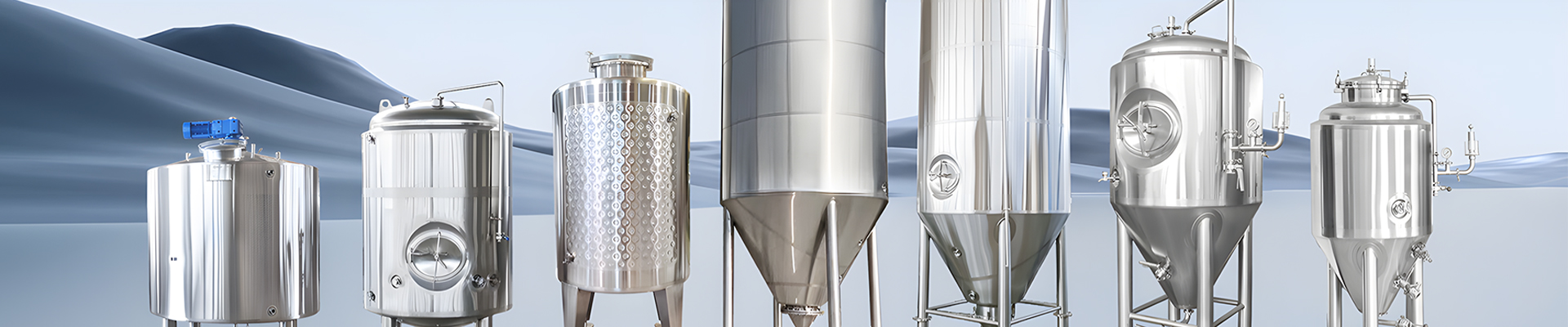
Most buyers eventually want their own branding, and the best time to discuss it is before the first order. Typical customization includes product sizing, colour, labelling, packaging, and documentation.
Product customization: dimensions, capacity, voltage and configuration tailored to your market.
Branding: logo marking, silk-screen printing, embossing or laser marking.
Packaging: neutral, retail-ready or private-label cartons with your barcode and compliance text.
Documentation: user manuals and compliance statements in your market's language.
Discuss minimum order quantities for customized runs early, because decoration and tooling often set a higher MOQ than the base product.
Pricing, MOQ and Cost of Ownership
Unit price is only one part of the equation. The lowest quote frequently carries the highest total cost once durability, freight and returns are included.
| Cost Factor | What to Compare | Hidden Risk |
|---|
| Unit price | FOB per unit | Ignoring specification differences |
| Durability | Service life | Premature failure and warranty claims |
| Freight | Volumetric weight | Light but bulky shipments cost more |
| Duty and compliance | HS code and certification | Clearance delays |
| Returns | Defect rate | Reputational damage |
| Support | Spare parts and service | Downtime for your customer |
Build a landed-cost model and negotiate on the total. Suppliers respect buyers who understand their cost drivers because it signals a long-term relationship.
Building a Long-Term Supply Relationship
The best pricing and priority allocation go to buyers who order predictably. Share a rolling forecast, place consistent orders, and give clear feedback on quality. Factories reward reliable partners with better lead times and preferential treatment when capacity is tight.
It also helps to visit the factory when practical. A single visit reveals more about capability than months of email.
Comparing Water Treatment And Beverage Processing Equipment Supplier Types
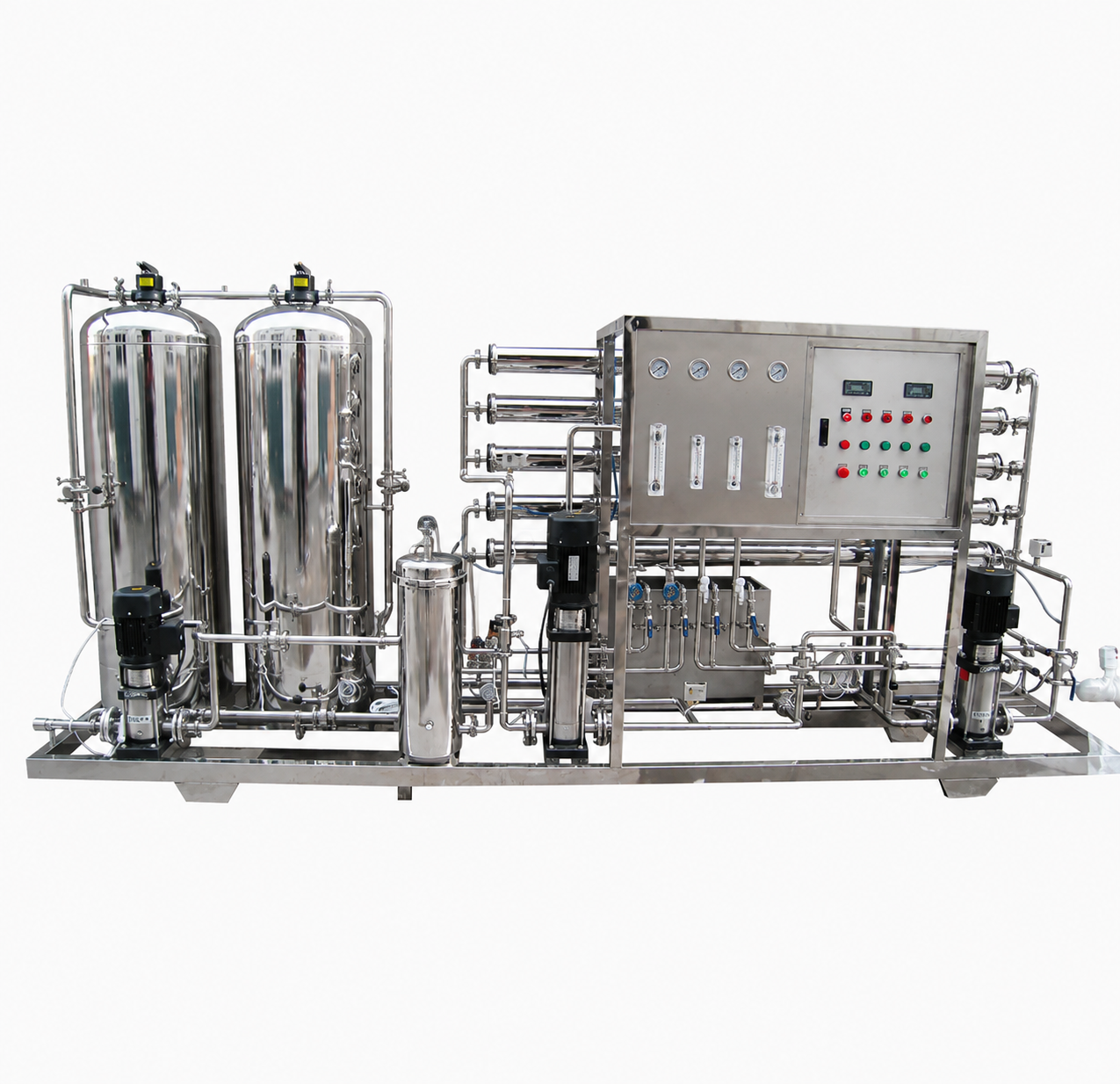
Not every supplier is the same kind of business. Understanding the model helps you choose the one that fits your needs.
| Supplier Type | Control Over Quality | Price Level | Best For | Main Risk |
|---|
| Direct factory | Highest | Competitive | Volume buyers | Higher MOQ |
| Trading company | Medium | Higher | Small or mixed orders | Less quality control |
| OEM/ODM partner | High | Competitive | Brand owners | Development time |
| Distributor | Low | Highest | Urgent small orders | Limited customization |
For most buyers building a brand or a stable catalogue, a direct factory with genuine customization capability offers the best balance of quality control, price and flexibility.
Standards and Certifications That Apply
Depending on your destination market, several standards and certifications may apply to water treatment and beverage processing equipment. Confirming them early prevents costly compliance surprises.
WHO drinking water guidelines: confirm the factory can supply documentation for this standard where it applies to your market.
NSF/ANSI 61: confirm the factory can supply documentation for this standard where it applies to your market.
ISO 9001: confirm the factory can supply documentation for this standard where it applies to your market.
CE: confirm the factory can supply documentation for this standard where it applies to your market.
CE: request the certificate and verify its validity and scope.
ISO 9001: request the certificate and verify its validity and scope.
NSF/ANSI 61: request the certificate and verify its validity and scope.
A Practical Sourcing Process, Step by Step
A structured process reduces risk far more than a clever negotiation.
Define your technical specification and target market requirements.
Shortlist three suppliers and request capability data and references.
Order paid samples and test them against your specification.
Audit the chosen factory against the five dimensions above.
Agree pricing, MOQ, packaging and lead times in writing.
Place a trial order and inspect the shipment on arrival.
Review performance with real customers before scaling.
Lock in capacity and lead times for the coming season.
Which Ro Water Purification Systems Supplier Red Flags Should You Never Ignore?
Red flags are cheap to check and expensive to ignore. The table below lists the signals that most reliably predict trouble in ro water purification systems sourcing, why they matter, and the low-cost check that confirms or clears each one:
| Red Flag | Why It Matters | Low-Cost Check |
|---|
| Quotation arrived within hours, identical for different specs | Price was not calculated; expect cost recovery later | Ask for a costed line-item breakdown and watch the reaction |
| Certificate copies with edited-looking files | Forged or recycled certificates void your compliance file | Verify certificate numbers in the issuing body's database |
| Refuses live video of the exact workshop claimed | Photos may not show the real production site | Offer a scheduled 20-minute walkthrough; hesitation is the answer |
| Bank account differs from the contracting company | Classic payment-fraud setup | Match account name to contract entity; refuse third-party accounts |
| No questions asked about your requirements | Order will be produced to assumptions, not specification | Send a deliberately incomplete spec; see whether gaps are raised |
| Sample perfect but bulk quote far below sample cost | Sample made on a special line; bulk will not match | Ask which production line and process made the sample |
No single red flag is proof of a bad supplier â but two or more together form a pattern that deserves either a hard conversation or a quiet exit from the negotiation. Document what you saw and when; patterns are only visible across messages.
Frequently Asked Questions
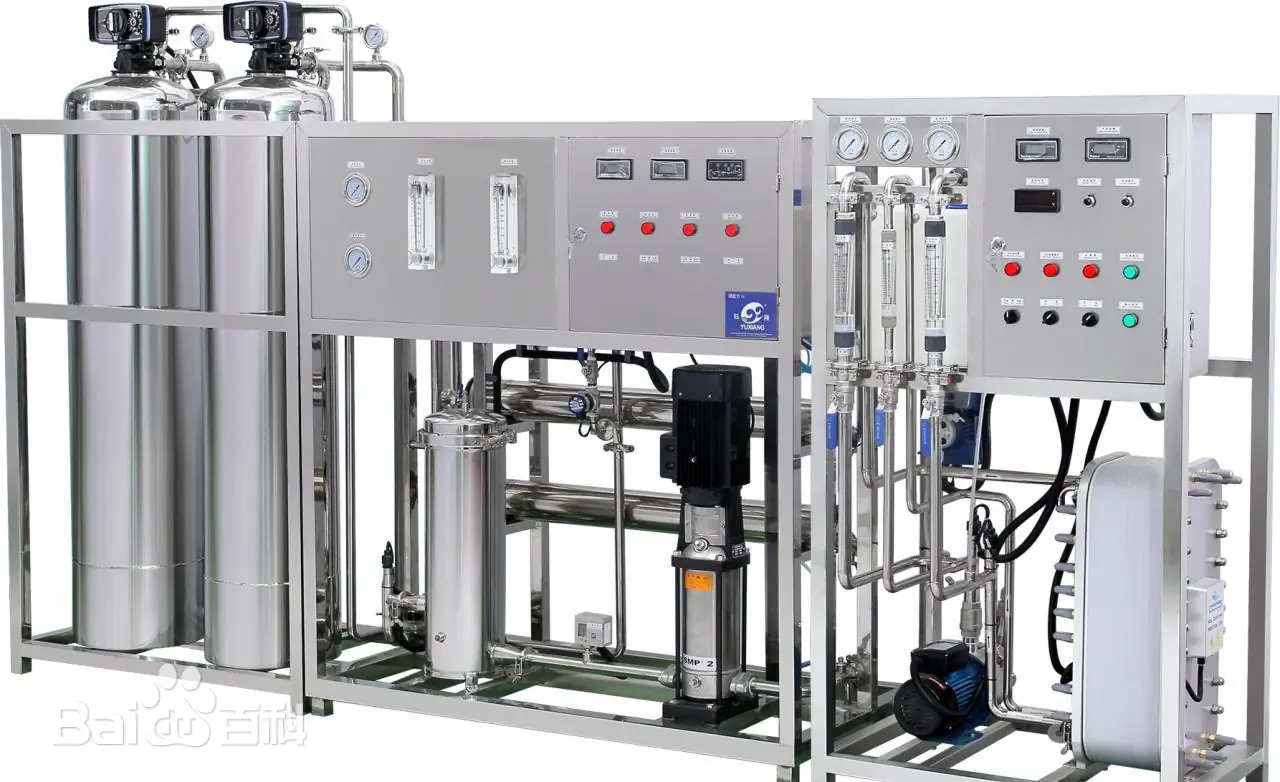
What is the minimum order quantity for Ro Water Purification Systems?
MOQ depends on the product and level of customization. Standard configurations typically start lower than private-label runs, which may require tooling or dedicated production. Ask the factory for a clear MOQ schedule by SKU.
How long does production take for a first order?
A first order typically takes three to six weeks including sampling and approval, while repeat orders are usually shorter. Peak season can extend lead times, so plan ahead.
How do I verify quality before a large order?
Order paid samples from at least two production batches, test them against your specification, and require a pre-shipment inspection before release. Documented inspection is more reliable than any sample alone.
Can I customize the product for my market?
Yes. Most manufacturers of water treatment and beverage processing equipment offer customization of size, colour, branding and packaging. Discuss the MOQ implications before committing.
What certifications should I expect?
At minimum, expect CE, ISO 9001, NSF/ANSI 61. The exact requirement depends on your destination market and the application.
How should I compare suppliers on price?
Compare landed cost per unit of service life, not FOB price alone. Include freight, duty, defect rate and spare parts in the calculation.
Do you offer after-sales support and spare parts?
A reliable manufacturer maintains a spare parts inventory and provides technical documentation and support. Confirm the terms in writing before ordering.
How do I start a long-term partnership?
Begin with a trial order, measure performance honestly, and share feedback. Consistent ordering earns better pricing and priority.
Preparation That Moves Supplier Negotiations More Than Talking Does
Most negotiation outcomes are decided before anyone sits down: by the quality of the brief, the completeness of the comparison and the realism of the targets. Buyers who prepare on paper negotiate positions; buyers who prepare on data negotiate facts. The preparation stack that consistently pays for itself:
| Preparation Item | Effort | What It Changes at the Table |
|---|
| Normalised quote comparison | 2â3 hours | Replaces 'your price is high' with a specific, sourced gap figure |
| Volume forecast by quarter | 1 hour | Unlocks capacity commitments and better pricing bands |
| Specification frozen with revision ID | 2 hours | Removes the ambiguity surcharge hidden in every vague RFQ |
| Market cost intelligence | 3â4 hours | Material indices and freight levels turn opinions into arithmetic |
| Walk-away position written down | 30 minutes | Prevents the slow drift past your own limits in the room |
| Relationship history one-pager | 1 hour | Scorecard trends justify why you ask for what you ask for |
Notice what is absent: scripts, bluffs and theatrics. Suppliers hear through all three within minutes â they negotiate daily, you do not. Data is the only leverage a part-time negotiator has, and the good news is that it is the stronger lever anyway.
Supplier Reference Visits: Getting Past the Showroom Floor
A visit earns its airfare when it sees the process, not the presentation. Three habits separate useful factory visits from guided tours:
Ask for the process walk in production order: raw material in, every transformation step, finished goods out. Hesitation on any step tells you which stage is outsourced, improvised or fragile.
Ask to see the records, not the equipment: calibration stickers, in-process check sheets, training matrices. Equipment proves spending; records prove management.
Follow one batch: pick a recent order and trace it end to end â who checked what, where it failed, what changed. A factory that can trace a batch has control; one that cannot is guessing in bulk.
And watch the small tells: whether the workshop supervisor answers before the salesperson does, whether reject areas exist as physical places rather than concepts, and whether workers look up when the owner walks through. None of these is conclusive alone; together they read a factory more accurately than any brochure.
Freight and Duty Inputs That Change Your Supplier Ranking

Two suppliers one shipping-class apart can flip places in your ranking once freight and duty enter the arithmetic â and they always enter. Carton weight and dimensions drive freight class; material composition drives HS classification and duty; packaging choices affect both. Bring your forwarder into the RFQ stage for anything freight-sensitive, ask suppliers for carton specs and net/gross weights with their quotes, and normalise duty assumptions by checking classification yourself rather than accepting the supplier's code. The buyers who skip this step routinely 'save' three percent on price and lose five on freight, discovering it only after the first container â at which point the ranking was already wrong for a quarter.
A Costed Risk View: What Each Sourcing Shortcut Actually Costs
Risk conversations stay abstract until the rows carry numbers. The table below prices the shortcuts buyers take most often â the figures are conservative industry ranges for mid-sized orders, and the shape of the arithmetic holds across the water treatment and beverage processing equipment category:
| Shortcut Taken | Typical Saving Up Front | Expected Cost When It Bites | Net Position |
|---|
| Skipping certificate verification | Days of admin | Failed compliance review; retest and relabel cycles | Strongly negative |
| First quote accepted without comparison | A week of RFQ time | 8â20% price premium, locked for the relationship | Negative within one order |
| Golden sample skipped | One approval loop | Disputes on every subsequent order | Negative by the second order |
| During-production inspection dropped | One inspection fee | Rework at 3â10Ã the fee if a systematic defect runs | Negative on defective lots |
| Single-source for a hero SKU | Simpler management | Outage exposure on your best-selling line | Catastrophic in outage years |
None of the prevention lines is expensive in absolute terms; the expense is remembering to do them. This is why the checklist in the closing section exists â printed, pinned, and applied to every order including the routine ones.
Reading a Supplier's Silence: What Slow Replies Usually Mean
Response latency is data. A supplier who answers specification questions within a day and goes quiet for a week when asked about certificates is telling you where the weakness lives. Slow replies pattern into recognisable causes: capacity overload (they are prioritising paying customers â you are not yet one), internal dependence (the salesperson must chase engineering for every technical answer, and engineering is not chasing back), or discomfort (the answer is unwelcome and being drafted carefully). Each cause has a different remedy â allocate volume gradually, insist on direct engineering contact, or treat the evaded topic as your audit focus. What silence never means is that the topic went away; buyers who let one question drift usually meet it again as a shipment problem.
Annual Cost Review: The Hour That Pays for the Whole Programme
Once a year, reprice the programme against the market: refresh the landed-cost model with current freight and material indices, re-run the TCO comparison across your incumbent and two alternates, and re-check the duty and compliance picture for every destination market. The review has two honest outcomes â confirmation that the incumbent still wins (worth knowing, and worth telling them) or discovery that the market moved (worth knowing before your customers notice your prices). Either outcome justifies the hour. The buyers who skip it are not saving an hour; they are deferring it, with interest, to the quarter when a competitor's price forces the same analysis under deadline pressure.
Questions Buyers Ask About Water Treatment And Beverage Processing Equipment â Answered Directly

Is a higher price ever the better sourcing decision?
Regularly â wherever the price difference buys documented capability: better process control, faster engineering answers, stronger compliance files. The correct comparison is never unit price against unit price; it is total cost of ownership against total cost of ownership. On that basis a ten percent premium that halves defect rates and eliminates compliance friction is usually the cheaper number, and your accountants will confirm it once the claim and rework costs are attributed to the product line honestly.
How much volume do I need before suppliers take me seriously?
Less than most buyers fear, provided the volume is predictable and the buyer is organised. Suppliers rank accounts by forecast reliability and communication quality before absolute size: a small buyer with a written quarterly forecast and clean specifications gets better allocation than a larger buyer whose orders arrive erratic and under-specified. Predictability is the currency; volume is just the exchange rate.
Can I run two suppliers for the same product without conflict?
Yes, and on any critical line you should. The mechanics that keep it peaceful: transparent volume splits announced to both, identical specifications issued to both, and performance â not promises â deciding share adjustments each quarter. Suppliers accept rational diversibility far better than discovery of it, and the competitive tension tends to keep both factories attentive in ways a monopolised account stops being.
What single document prevents the most disputes?
The approved golden sample record â specification revision, sample ID, seal location, photographs, sign-off names on both sides, referenced in every purchase order. It is the arbiter for almost every workmanship disagreement, and its absence converts each one into an opinion contest. Runners-up: the frozen one-page specification and the written AQL plan, both of which settle the disputes the golden sample cannot.
How do I get engineering answers instead of sales answers?
Ask for the channel explicitly: request that a technical contact be named at qualification, copy them on specification questions, and structure one direct engineering call per quarter. Suppliers route answers to whoever asks credibly â buyers who accept all answers through sales will keep receiving sales answers, politely rendered and technically thin. The factories worth buying from have engineers who enjoy these conversations; if the channel never opens, treat that as capability data.
Building the Second Source Before You Emotionally Need One
Second sources qualified in calm times cost sample orders and a few audits; second sources sourced in crisis cost premiums, quality risk and expedited freight, all at once. The calm-time sequence: keep a live list of two qualified alternates per critical line, refresh their sample orders twice a year so the qualification does not go stale, and let them know their status honestly â 'qualified, currently sharing fifteen percent' keeps a factory attentive without promising volume you do not have. The discipline is less about disloyalty than about realism: factories themselves qualify multiple customers for the same reason, and the ones who object to your symmetric prudence are usually the ones whose dependence you were about to discover the hard way.
Next Steps
If you are sourcing water treatment and beverage processing equipment for distribution, OEM production or a project, é西è¾æ©ä¼¦ç¹é
¿é ææ¯æéå
¬å¸ (www.aelt-brewing.com) would be glad to share our experience and provide samples. Visit www.aelt-brewing.com to explore the catalogue, request a quotation, and discuss customization for your market.
 +86 29-87031531



 Telefon
Kommentar
(0)